
25 November, 2026 0 comments Leave a comment
Quick Summary
Durable scrunchies are the hair ties that stay secure through tumbling, stunts and full practice days. Look for a firm, stretch-recovering elastic, tightly stitched seams and a textured fabric that grips rather than slides. Those three features decide whether a tie holds up under repeated intense use.
- Stretch the band and release it; it should snap back without sagging.
- Pull gently on the stitching and reject any seam with loose threads or gaps.
- Choose a textured fabric, since very slick fabrics can slip during jumps and inversions.
- Wrap the scrunchie twice around the ponytail so it bites into the hair.
- Replace a scrunchie when the elastic stops snapping back or the seam starts separating.
Table of Contents
- Choosing Durable Scrunchies for Intense Cheer Practice
- How Do You Choose a Scrunchie That Survives Cheer Practice?
- Why Hair Security Matters During Tumbling and Stunting
- Materials, Elastic and Construction: What Holds Up
- Best Scrunchies for Sports and Thick Hair
- How to Keep a Scrunchie From Slipping During Stunts
- How to Wash Scrunchies and Know When to Replace Them
- Pick Your Practice Scrunchies and Order Your Team Set
- Frequently Asked Questions
Choosing Durable Scrunchies for Intense Cheer Practice
Last Updated: November 24, 2026
Durable scrunchies are the hair ties that stay put through tumbling, stunts and full practice days, and choosing one comes down to elastic, fabric and stitching. At The Ultimate Bow, we build our cheer and sports accessories for athletes who move hard and need their hair secured from warm-up to final stunt. A scrunchie that slides out mid-routine costs more than a few seconds of fixing; it disrupts the athlete and the team.
Start with the question that decides most purchases: will this scrunchie survive repeated, intense use? Look at how the band is built, how it feels when stretched and whether it returns to shape. Hair security matters just as much as the look, so the features below are worth checking before you order.
How Do You Choose a Scrunchie That Survives Cheer Practice?
Choose a scrunchie with a firm, stretch-recovering band, a tightly stitched seam and a fabric that grips rather than slides. These three features decide whether the tie stays secure through repeated tumbling and stunting.
Work through this quick checklist before you buy:
- Elastic recovery: Stretch the band and release it. It should snap back to its original shape without sagging.
- Seam strength: Pull gently on the stitching. Loose threads or gaps signal a tie that will fail under repeated wear.
- Grip: Choose a fabric with some texture. Very slick fabrics can slip out during jumps and inversions.
- Size for your hair: Match the scrunchie to your hair volume. Thick or long hair needs a wider, firmer band.
- Finish: Metallic and sequin finishes look sharp under competition lights, but check that the decorative layer is not peeling or scratchy.
Why Hair Security Matters During Tumbling and Stunting
Hair that comes loose during tumbling or stunting can distract the athlete, catch on partners and interrupt the routine. A secure hold keeps the focus on the movement itself.
Consider how much movement a single practice involves. Athletes flip, invert, lift and land repeatedly, and each motion pulls on the hair. A tie that holds through one warm-up may not hold through a full run-through of a routine.
Hair damage is also a concern. A tie that is too tight can cause tension at the hairline, while one that slips may cause the athlete to re-tighten repeatedly, which adds friction. Choose a band that holds firmly without pinching, and check it after each practice for signs of stretching or fraying.
Materials, Elastic and Construction: What Holds Up
Material and construction trade-offs decide whether a scrunchie survives a season of tumbling and stunting or fails after a few practices. The goal is not the softest or the shiniest tie, it is the one whose grip, stretch recovery and seams hold up under repeated pulling.
Fabric and grip. Fabric surface texture is the first line of defense against slippage. Smooth satins and polished metallics look sharp under competition lights, but they offer little friction against hair, so they rely almost entirely on the elastic to stay put.
Elastic core and width. The elastic core is what actually holds the ponytail. A wider elastic spreads pressure over a larger area, which improves hold on thick hair and reduces the pinching that causes tension at the hairline. A thinner core concentrates pressure and can dig in, and it stretches out faster under the weight of long or heavy hair. The trade-off is real: thicker, wider elastic holds better but can feel firm on fine hair, while a thin core feels comfortable at first and then sags.
Stitching and seam construction. Seams take the most stress because every wrap pulls against the join. Tight, even stitches resist fraying; loose or sparse stitching creates gaps where the fabric separates and the elastic eventually escapes. Run a thumb along the seam before you buy, if you can feel loose thread ends or a gap, that join will fail first.
Closure and decorative layers. Rhinestones, glitter and metallic coatings add shine, but each one is a potential failure point. Embellishments should sit flat and be securely attached; a loose rhinestone can snag hair or a partner's uniform during a stunt. Metallic coatings that peel expose a dull base layer and can leave residue in the hair.
Practice versus competition construction. A tie worn daily during intense training needs a firmer elastic, tighter stitching and a grippier fabric than one reserved for performances.
Watch out: a scrunchie that feels wonderfully soft and smooth in the package is often the one that slides out mid-stunt, because softness and grip usually pull in opposite directions.
The table below summarises the key construction trade-offs covered in this section.
| Feature | What to look for | Why it matters |
|---|---|---|
| Fabric and grip | Textured fabric | Smooth satins and metallics slide unless the elastic holds them |
| Elastic core | Wider elastic | Spreads pressure and holds thick or long hair better |
| Stitching | Tight, even seams | Loose stitches let the fabric separate and the elastic escape |
| Embellishments | Flat, securely attached | Loose rhinestones can snag hair or a partner's uniform |
| Practice ties | Firmer elastic, grippier fabric | Built to withstand daily training rather than one performance |
Best Scrunchies for Sports and Thick Hair
The best scrunchies for sports balance grip, stretch and comfort, but the right pick changes with hair type.
For most cheer and softball players, our Mystic Metallic Scrunchies at $9.99 are a practical starting point because they are built from the same material family used in cheer uniforms and gymnastics leotards, and they suit a range of sports, from softball and basketball to gymnastics and lacrosse. For a bolder competition look, the Prima Donna Metallic Scrunchies at $9.99 have a holographic finish that catches light well under competition lighting. Athletes who want extra sparkle can consider the Mystic Metallic Rhinestone Scrunchies at $14.99, which add rhinestone accents to the same base material. If you need team-branded accessories, our Custom Sublimated Logo Scrunchies at $13.99 let you send a logo or design for a custom scrunchie. You must have permission to use any logo you provide, and we reserve the right to decline trademarked, copyrighted or inappropriate designs. Looking to place a large order? Contact us for team pricing.
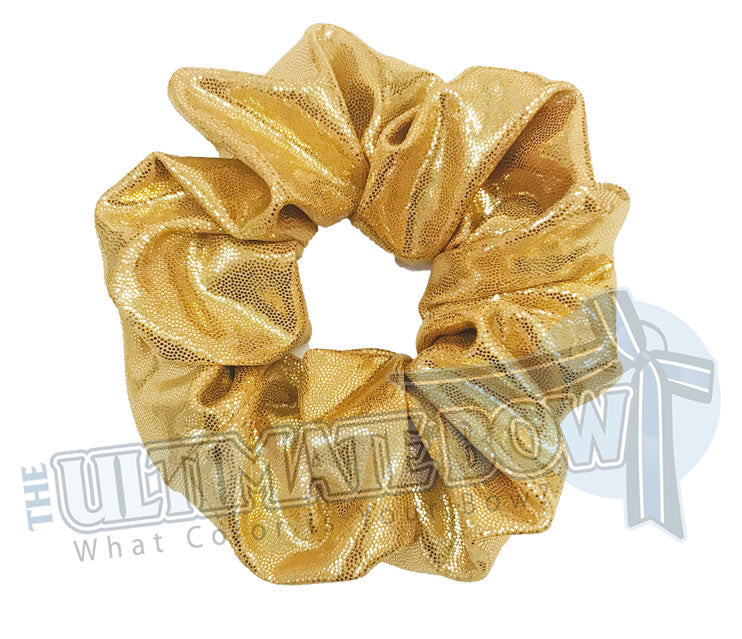
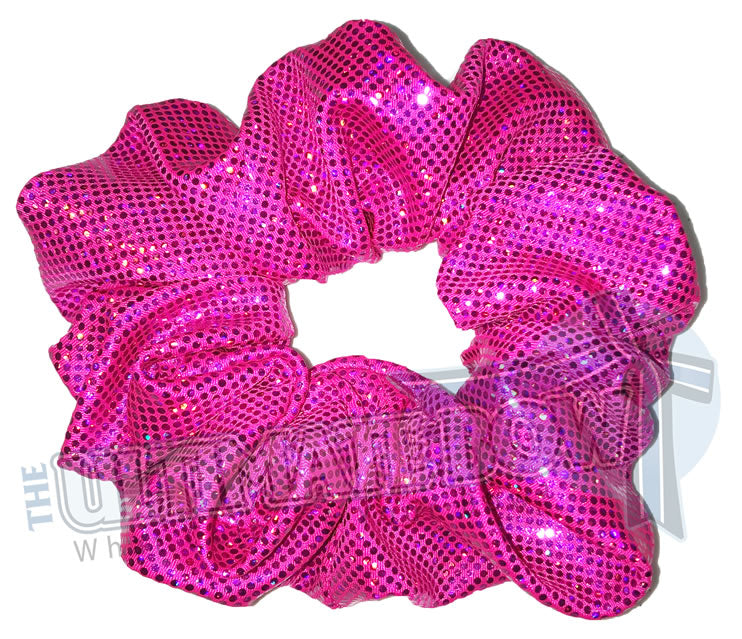
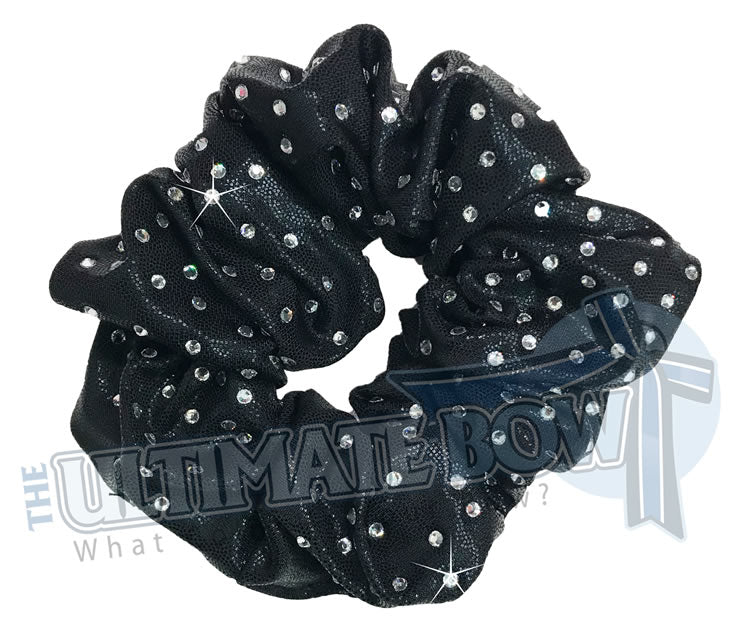
Fine hair. Fine hair has less natural friction, so grip matters more than width. You can compare softball scrunchies for short hair that stay put built to hold hair securely. Choose a textured fabric and a medium-width elastic that wraps snugly without needing excessive tension. Avoid very wide bands that cannot compress enough to hold thin hair, they tend to sit loose and slide.
Thick hair. Thick hair needs a wider band and firmer hold. Look for a scrunchie that wraps the full ponytail without pinching, and avoid very thin elastic, which can snap or stretch out under the weight. Test the fit with the hair fully gathered before a practice session, and confirm the band can wrap at least twice without straining the seam. Our durable hair ties for competitive youth softball show how these bands hold up in real practice.
Long hair. Long hair adds weight and momentum, which pulls hardest on the elastic during flips and landings. Choose a wider elastic with strong recovery and wrap it firmly; a tie that holds a short ponytail may sag under a long one by the end of a run-through.
Price of featured scrunchie styles
How to Keep a Scrunchie From Slipping During Stunts
To keep a scrunchie from slipping during stunts, pick a textured fabric, wrap the ponytail twice and check the tie before each stunt. Start with a secure base and the tie stays where it belongs. For guidance on choosing metallic scrunchies for cheer competitions, see our dedicated guide.
- Gather the hair firmly at the crown or base of the ponytail, then pull it smooth.
- Wrap the scrunchie twice around the ponytail so it bites into the hair rather than sitting on top.
- Tuck any loose ends under the band to reduce snagging on partners' hands or uniforms.
- Recheck before stunts and after each tumbling pass, since movement can loosen even a secure tie.
Watch out: a tie that is pulled too tight at the hairline can cause pain and breakage over time. Aim for snug, not strained.
How to Wash Scrunchies and Know When to Replace Them
Wash scrunchies by hand or on a gentle cycle in a mesh bag, then air dry them flat. Heat and harsh agitation are the main causes of stretched elastic and loosened decoration, so gentle care extends a tie's life.
Replace a scrunchie when the elastic no longer snaps back, when the seam begins to separate or when rhinestones or metallic layers start to lift.
Pick Your Practice Scrunchies and Order Your Team Set
Start by choosing one or two practice-ready styles for daily training, then reserve a competition set for performances. Separating the two keeps your best-looking ties fresh for big events.
For full team orders, our custom options let you match colors and logos across the squad. Contact us for team pricing on larger orders.
Ready to outfit your squad? Explore our Mystic Metallic Scrunchies and find hair ties built to hold through every routine.
Frequently Asked Questions
What are the best scrunchies for sports?
The best scrunchies for sports are those with a firm, stretch-resistant elastic, a tightly stitched seam and a fabric that grips rather than slides. For cheer, the Mystic Metallic Scrunchies ($9.99) and Prima Donna Metallic Scrunchies ($9.99) are made from the same material as competition uniforms, so they match the team look while handling repeated wear. Rhinestone Mystic Metallic Scrunchies ($14.99) suit athletes who want extra sparkle. Check the elastic before buying by stretching the scrunchie several times; it should return to shape without feeling loose.
Which type of scrunchie is best for intense cheer practice?
For intense cheer practice, choose a scrunchie with a sturdy elastic core, a fabric with some grip and a seam that will not pull apart during tumbling. Metallic-finish scrunchies made from uniform-grade material tend to hold well and look consistent with competition gear. Avoid very thin or purely decorative scrunchies for stunts, since they can stretch out or slide. Team orders from The Ultimate Bow can be built around these styles, and team pricing is available on larger orders.
How do you wash scrunchies after practice?
Remove the scrunchie from the hair after practice, rinse out sweat and product, and hand wash in lukewarm water with a mild detergent. Avoid wringing or twisting, which strains the elastic. Lay the scrunchie flat on a towel to air dry, away from direct heat. Washing after every practice keeps fabric from breaking down and helps the scrunchie keep its hold through the season.
How often should you replace a stretched-out scrunchie?
Replace a scrunchie once it no longer snaps back to its original size, begins to slip out during tumbling or shows fraying at the seam. A scrunchie that feels loose on the ponytail is no longer doing its job, and continued use can increase the risk of it failing mid-routine. Keeping a spare in your bag before competition makes it easy to swap out a worn one without disrupting your look.


Comments